· VizSeek · Blog · 2 min read
Visual Search Use Cases in Engineering, Quoting, and Quality
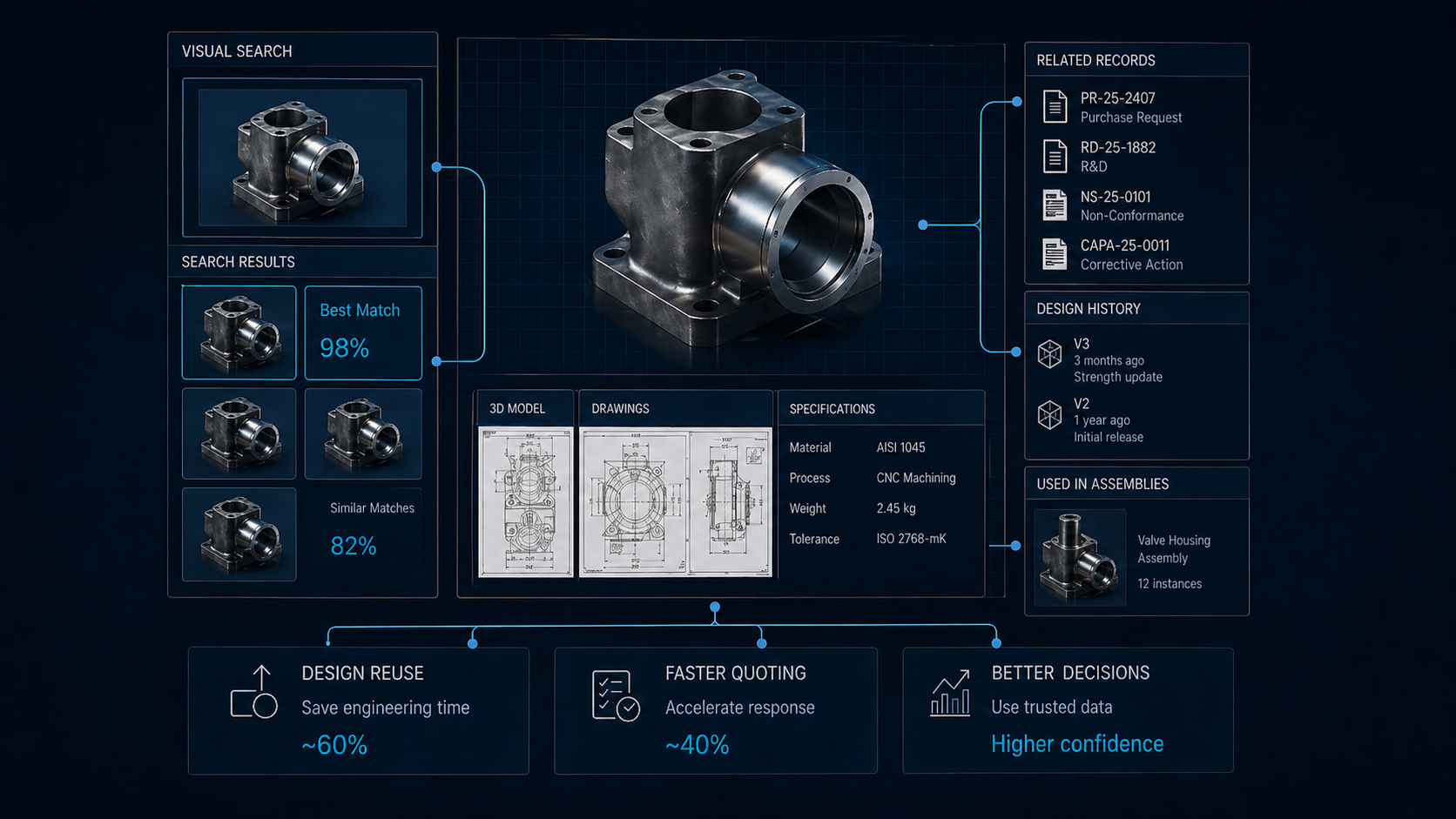
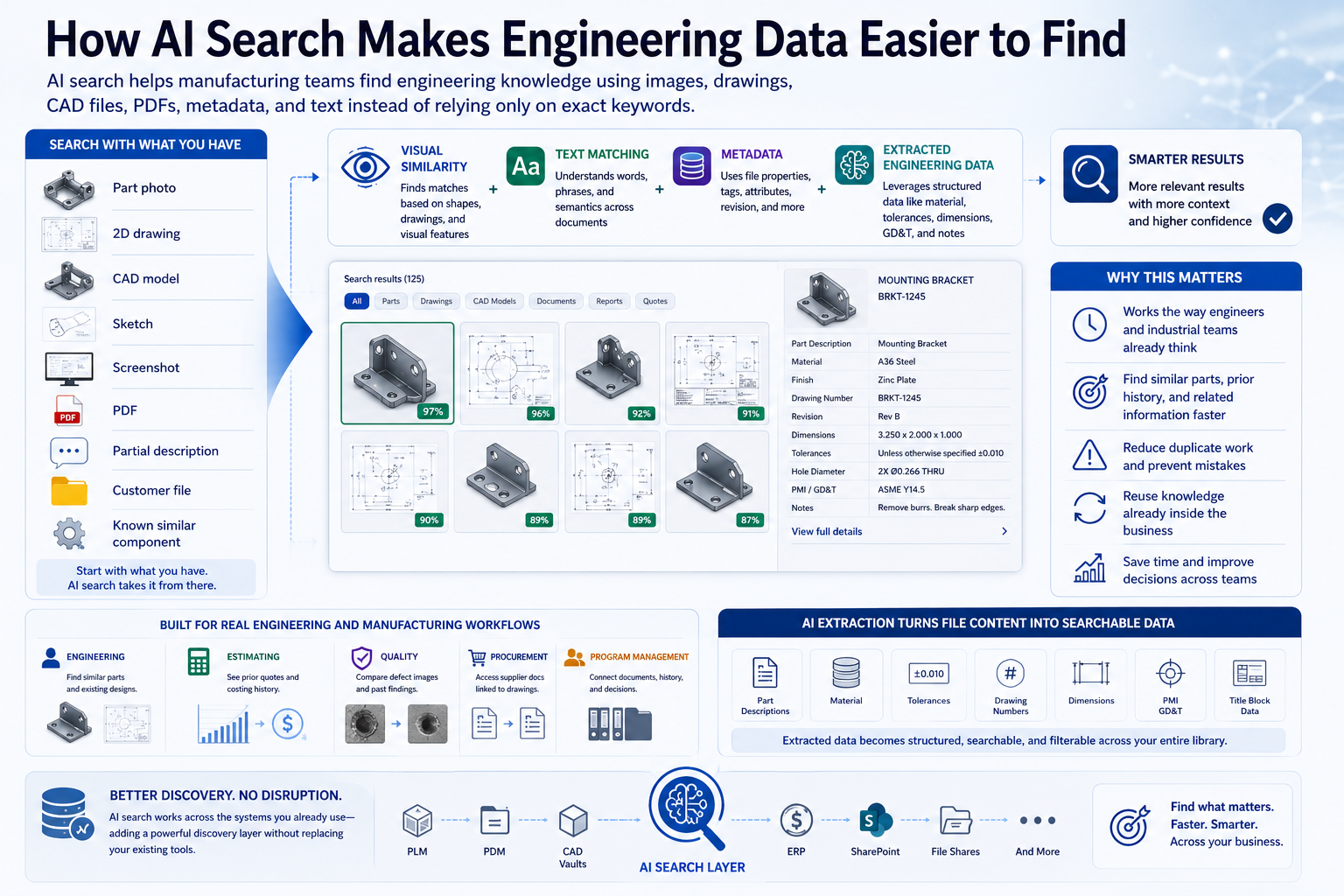
Visual search helps engineering, quoting, quality, procurement, and operations teams find related parts, drawings, records, and prior history faster.
Visual search matters because it fits the way manufacturing teams already work.
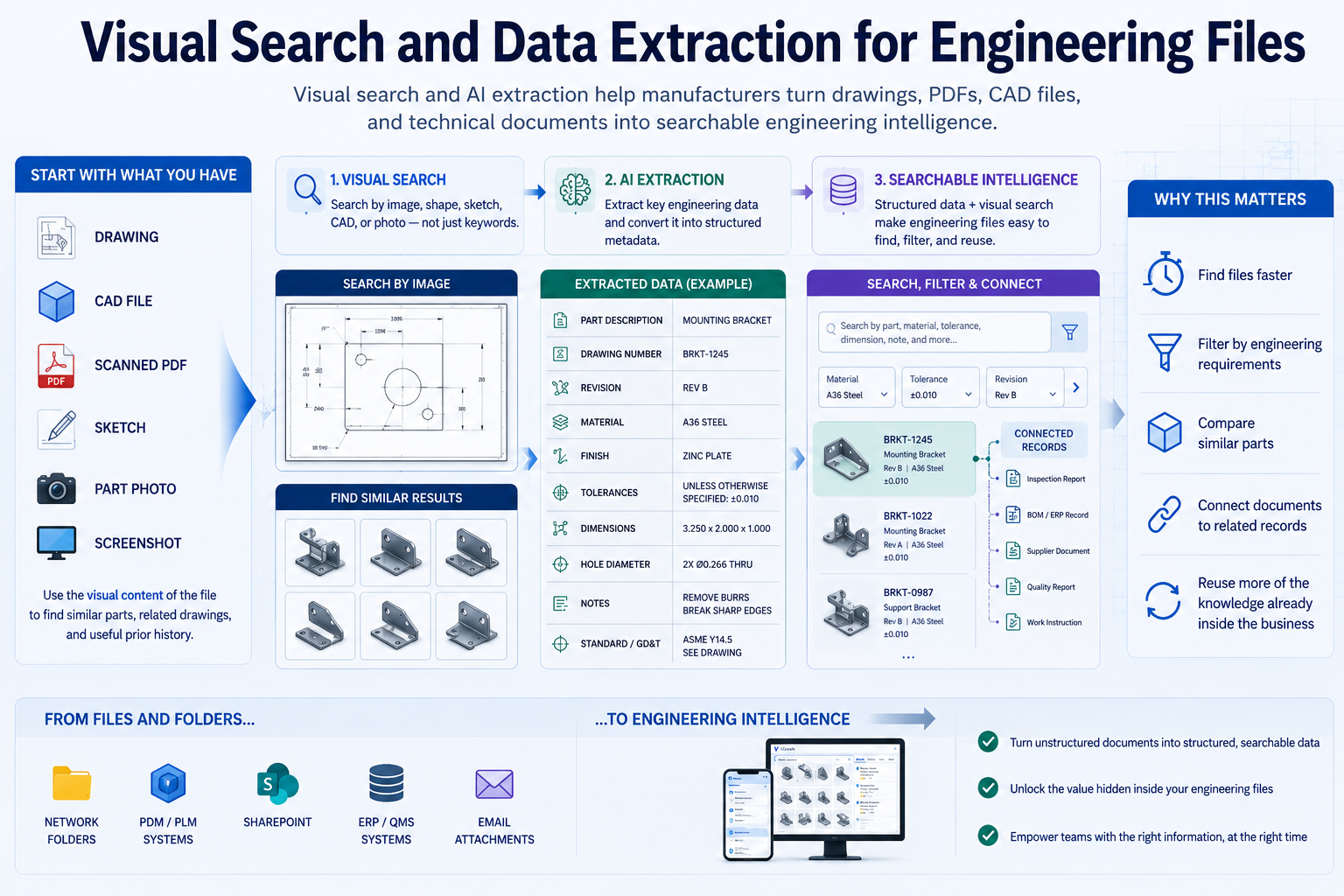
People often begin with something visual: a drawing, a part photo, a defect image, a sketch, or a CAD model. When search can start from that input, teams can connect their current task to prior work much faster.
Here are some of the clearest use cases.
Engineering Design Reuse
Engineers often need to answer a simple question before starting new work: have we already designed something like this?
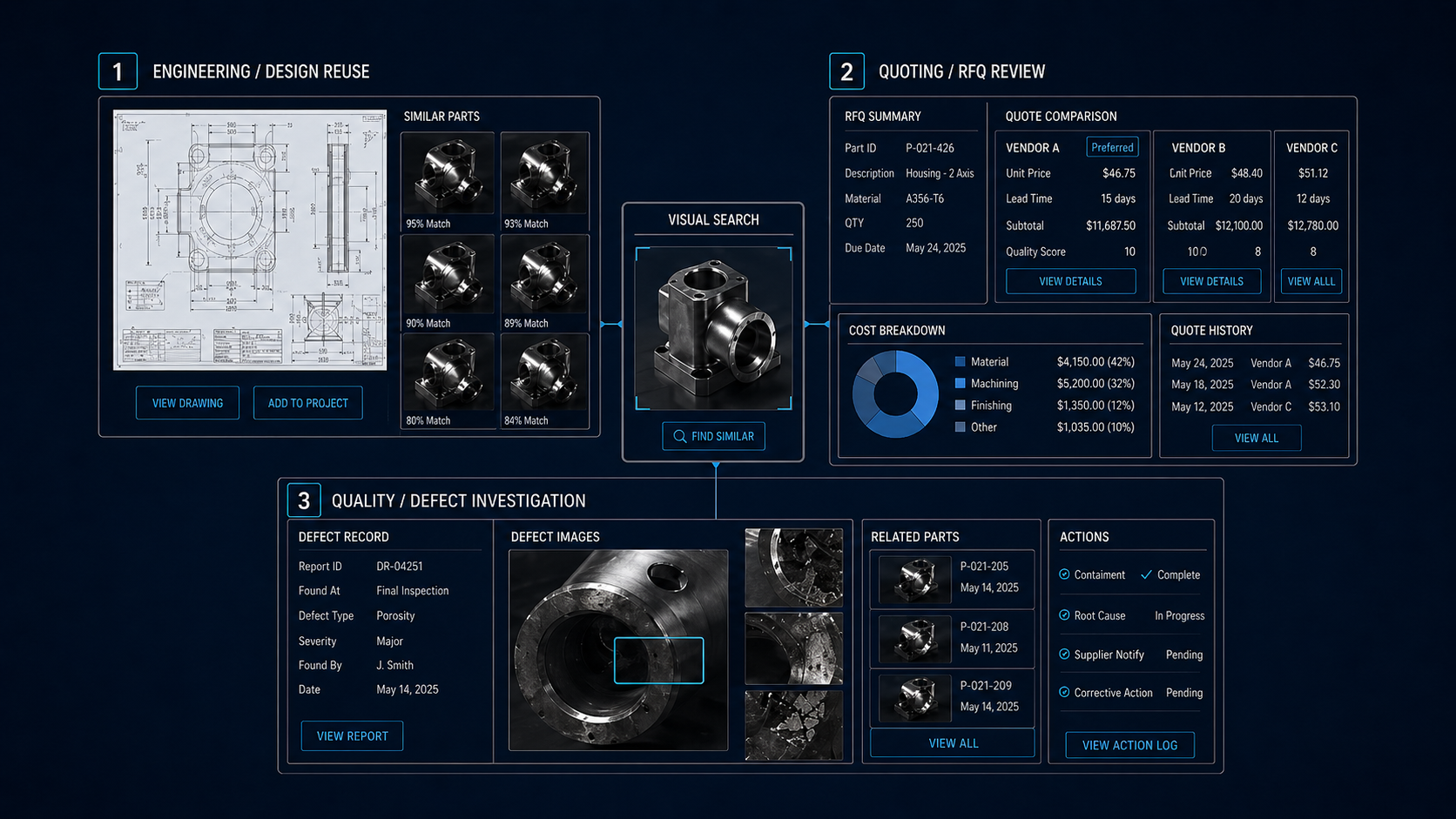
Visual search can help by comparing a query drawing, model, or similar component against existing design history. That makes it easier to find:
- similar parts
- existing drawings
- related CAD models
- prior assemblies
- approved design variants
The result is better reuse, less duplicate work, and more consistent standardization.
Quoting and Estimating
Estimators and sales engineers frequently receive customer drawings, part images, or RFQ packages with limited context.
Visual search can help them find:
- prior quotes
- similar jobs
- related manufacturing history
- material information
- connected documentation
That shortens the time needed to review a request and helps estimators avoid starting from scratch every time.
Quality Investigation
Quality teams often begin with a visible issue: a scratch, crack, dent, surface anomaly, or defect image from the floor.
Visual search can connect that image to:
- prior defect examples
- inspection reports
- nonconformance records
- related drawings
- linked product history
That makes investigation faster because the team can compare the current issue against known cases instead of manually hunting through disconnected records.
Procurement and Supplier Search
Buyers and sourcing teams may have a drawing or part image but not a reliable naming convention.
Visual search can help locate:
- supplier documentation
- alternate parts
- material records
- purchasing history
- related product families
That is especially useful when different systems or suppliers use different descriptions for the same item.
Operations and Maintenance
Technicians and operations teams often work from a real physical component, not a perfect database record.
Visual search can help them find:
- replacement information
- manuals
- work instructions
- similar parts
- maintenance history
That is a practical advantage when someone needs an answer quickly and the best available input is what they can see in front of them.
One Search Method, Many Workflows
What ties these use cases together is that the user does not need to begin with a perfect keyword.
They can start with the visual clue they already have and move from there to the files, records, and history the company already owns.
That is why visual search for manufacturing has such broad value across industrial teams. It is not only a file-finding tool. It is a workflow accelerator.
To see what capabilities matter in a real deployment, read what to look for in a manufacturing visual search platform.