
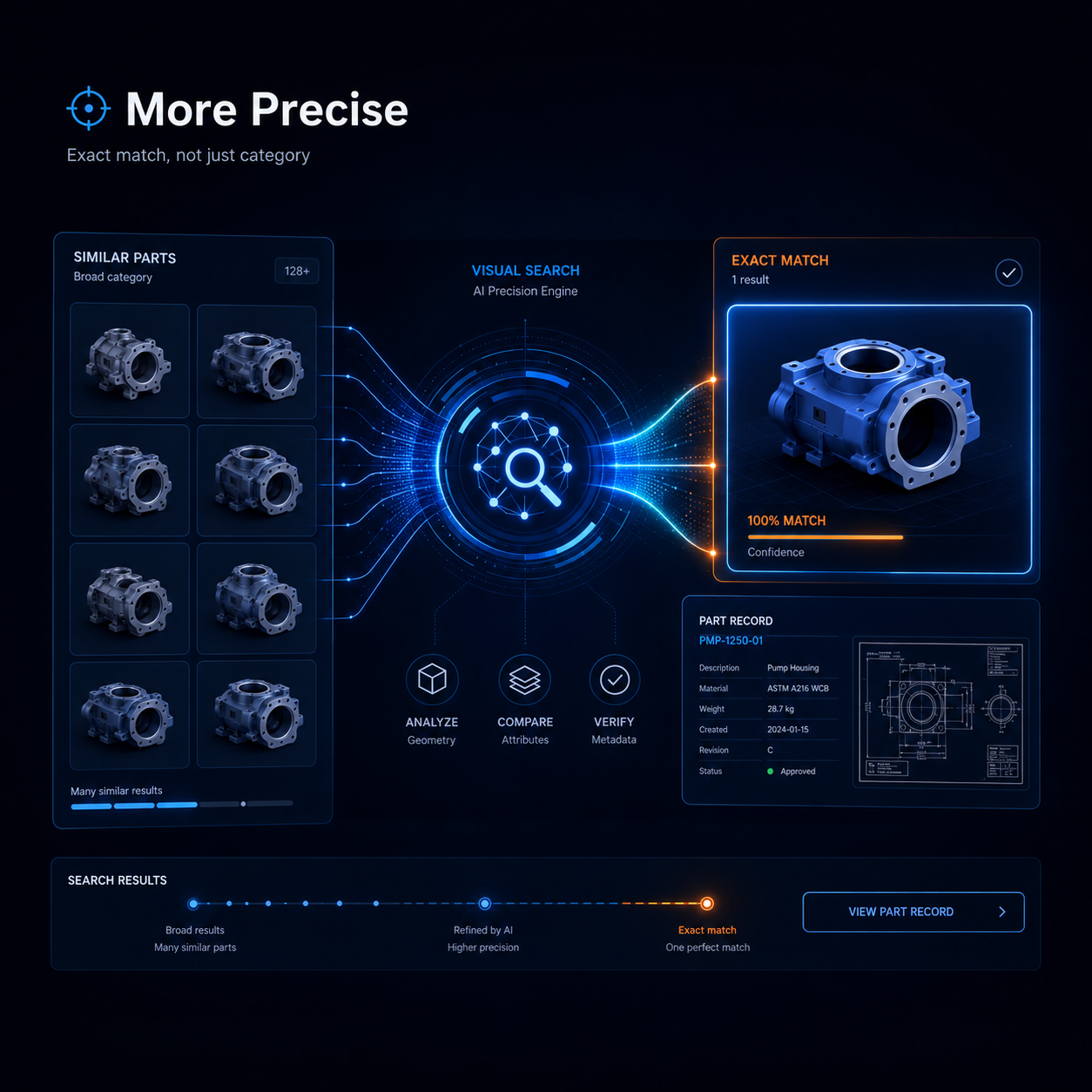
More precise
Find the exact engineering match, not just a broad category.
Our Technology
VizSeek is not web search. It is a visual search engine built specifically for industrial and engineering data. Instead of searching the public internet, VizSeek searches within each customer's own systems, databases, and technical file repositories.
Beyond Visual Matching
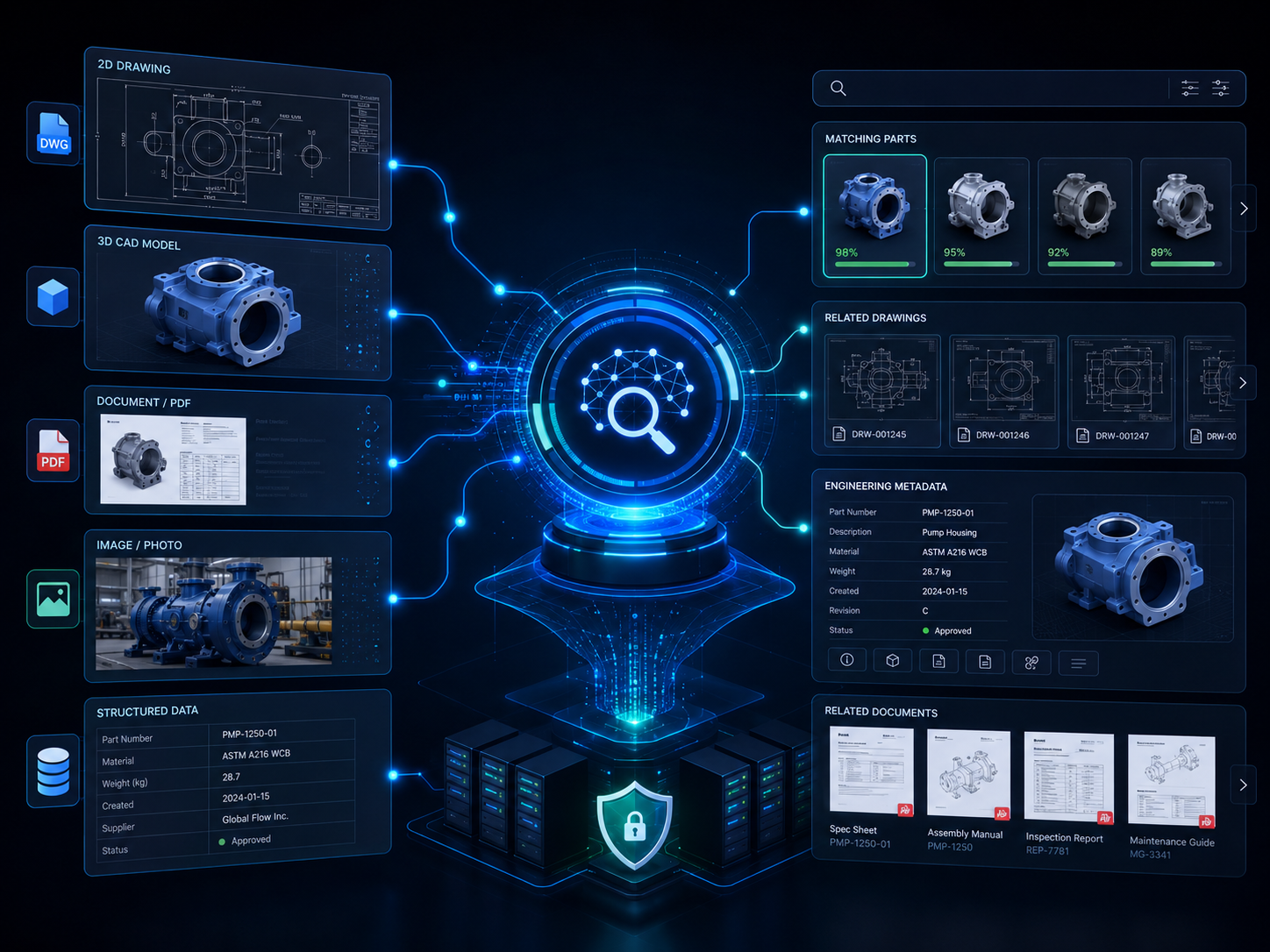
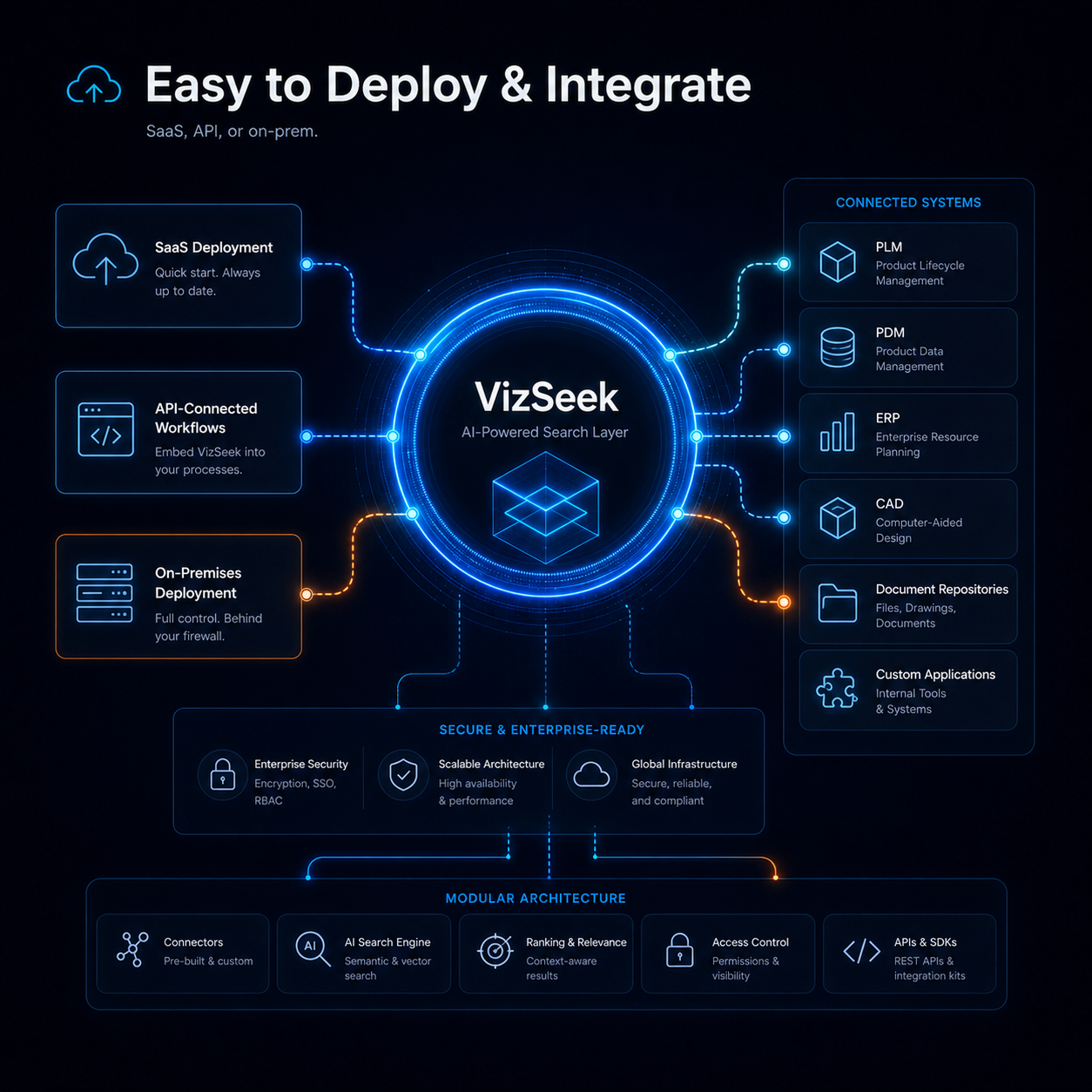
VizSeek combines more precise matching, cross-file-type intelligence, engineering-aware context, and flexible deployment to help teams find exact matches, connect related data, and fit visual search into existing systems.
Find the exact engineering match, not just a broad category.
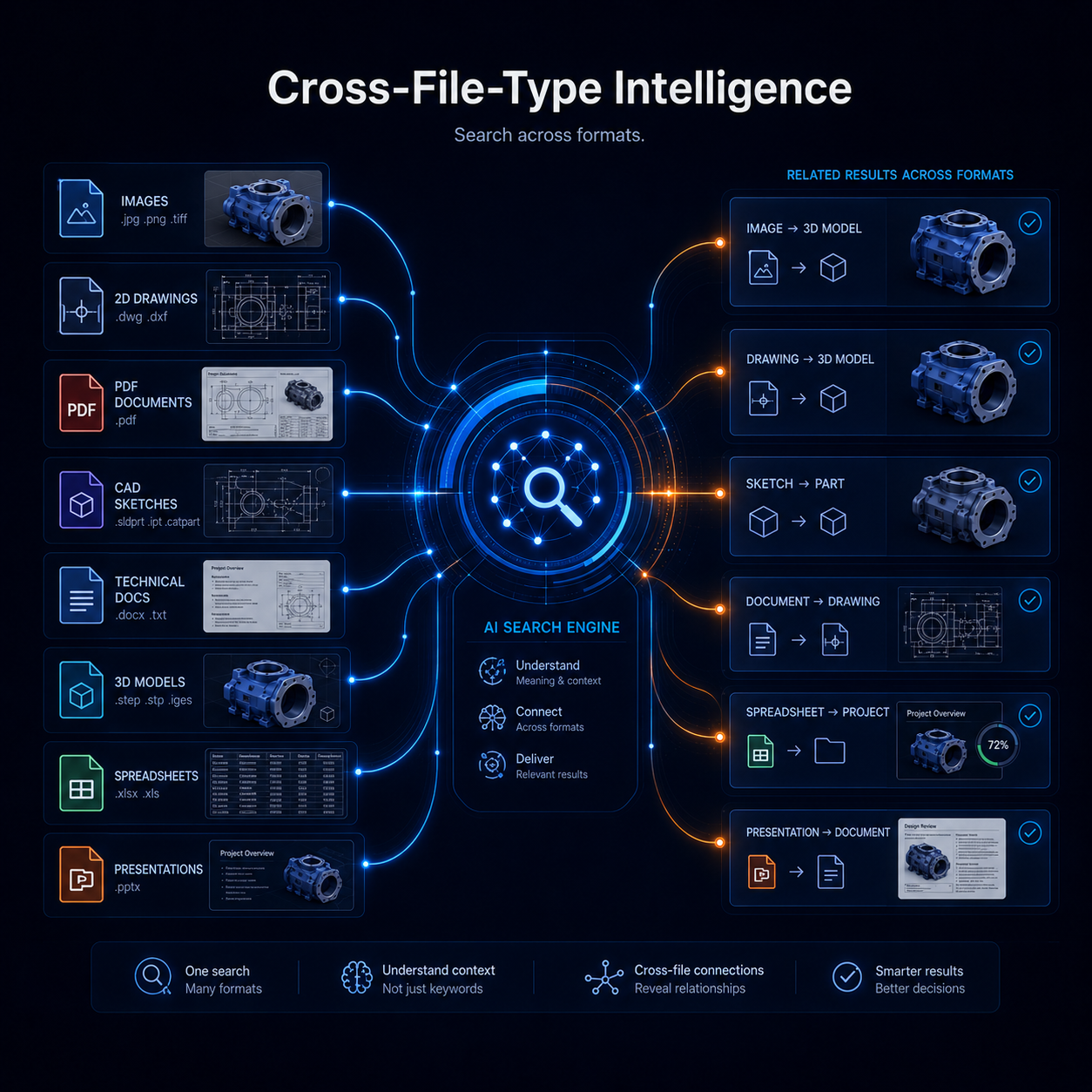
Search across drawings, models, documents, and spreadsheets.
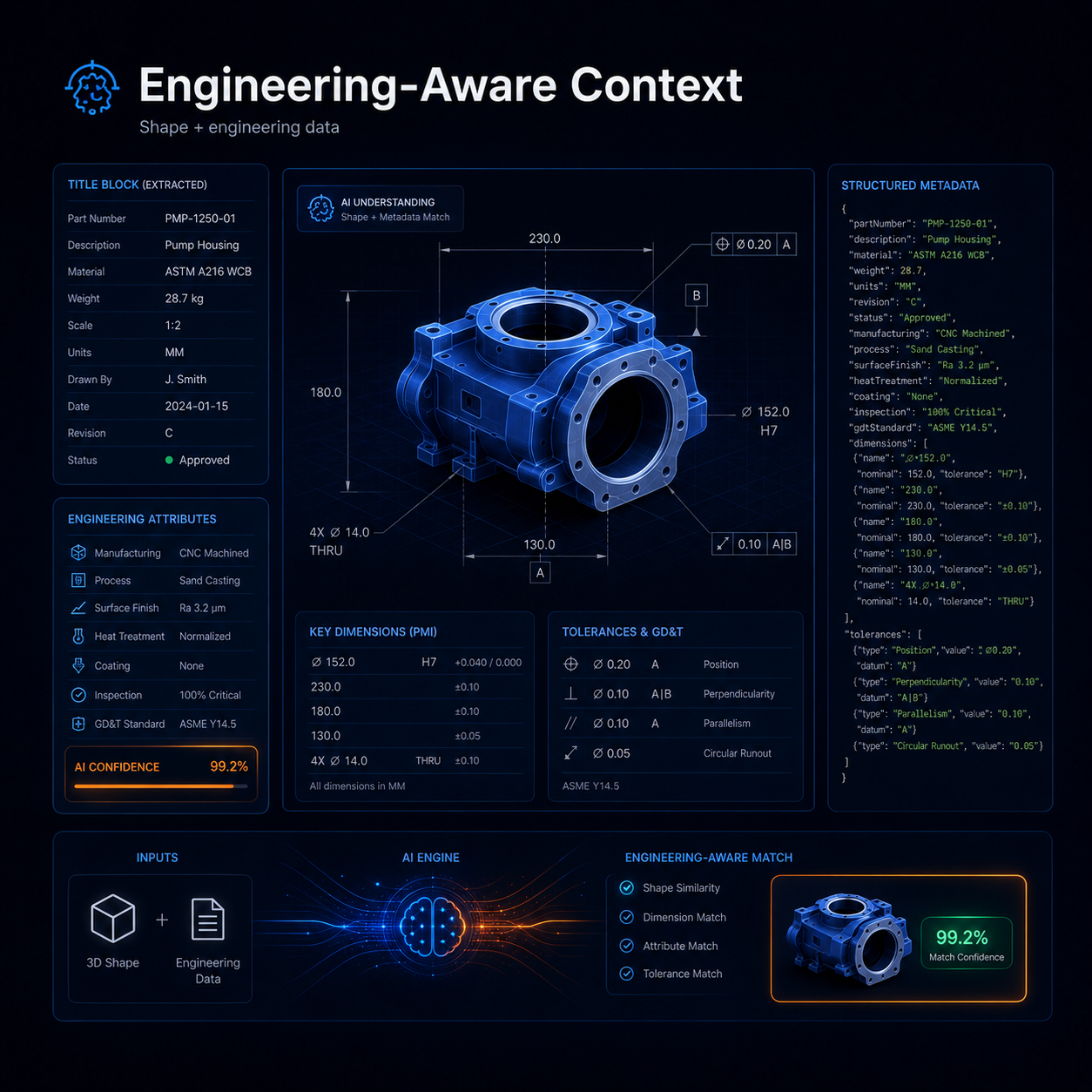
Blend visual similarity with extracted technical attributes.
Fit visual search into PLM, ERP, PDM, CAD, and custom apps.
Where Traditional Classification Breaks Down
Traditional classification depends on clean metadata, consistent naming, and disciplined manual processes. VizSeek helps close the gap by making engineering data searchable by shape, text, file type, extracted attributes, and context, even when data is messy, duplicated, or spread across systems.
Structured classification systems can be expensive to build, difficult to keep current, and hard to enforce across every team, location, and workflow. As products, suppliers, and projects change, metadata quality often becomes inconsistent.
Critical design and manufacturing information often lives across PLM, PDM, ERP, shared drives, CAD vaults, spreadsheets, PDFs, drawings, and legacy archives. Even when the data exists, teams may not know where to look or what keyword to use.
Engineers may recreate parts, drawings, or project work simply because they cannot quickly find what already exists. This leads to duplicate effort, higher costs, longer design cycles, and missed opportunities to standardize.
VizSeek helps teams discover reusable engineering data across systems without requiring a perfect company-wide classification rollout. By combining visual search, extracted attributes, and engineering-aware AI, VizSeek makes existing data easier to find and reuse.
AI-Ranked Search Accuracy
Visual search accuracy depends on the quality of the input, the depth of the indexed data, and how closely the search matches the engineering domain. VizSeek uses AI-powered similarity matching across images, drawings, and 3D models to return the most relevant results based on visual and contextual similarity.
VizSeek searches within the customer's indexed engineering data, which keeps results focused on the right parts, file types, and business context. As more drawings, models, documents, and metadata are indexed, the system becomes a stronger knowledge layer for finding relevant engineering information.
Visual search is most powerful when combined with extracted attributes, title block data, PMI, tolerances, dimensions, material information, and structured metadata. VizSeek blends visual similarity with engineering context to help users find the right result faster, even when they do not know the part number, drawing name, or exact keyword.
VizSeek ranks results by how closely they match the visual input. Whether the search starts with a photo, CAD sketch, drawing, or 3D model, the most visually similar results are prioritized first.
Questions about APIs, indexing, SaaS, on-premises deployment, or industrial fit? Talk to the engineers who build VizSeek.