· VizSeek · Blog · 2 min read
What to Look for in a Manufacturing Visual Search Platform
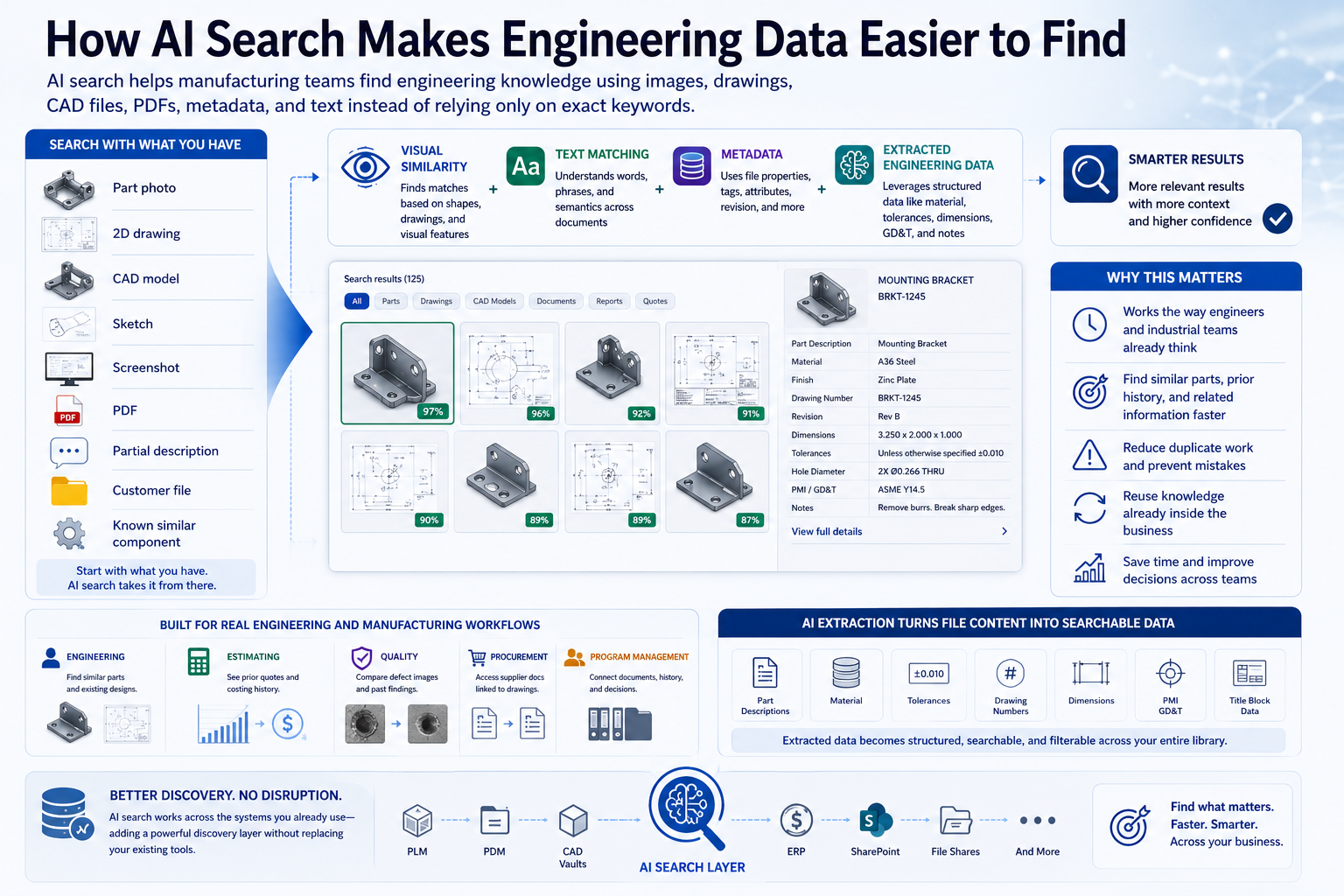
The best manufacturing visual search platforms go beyond simple image matching and support real engineering files, technical metadata, workflow context, and system integration.
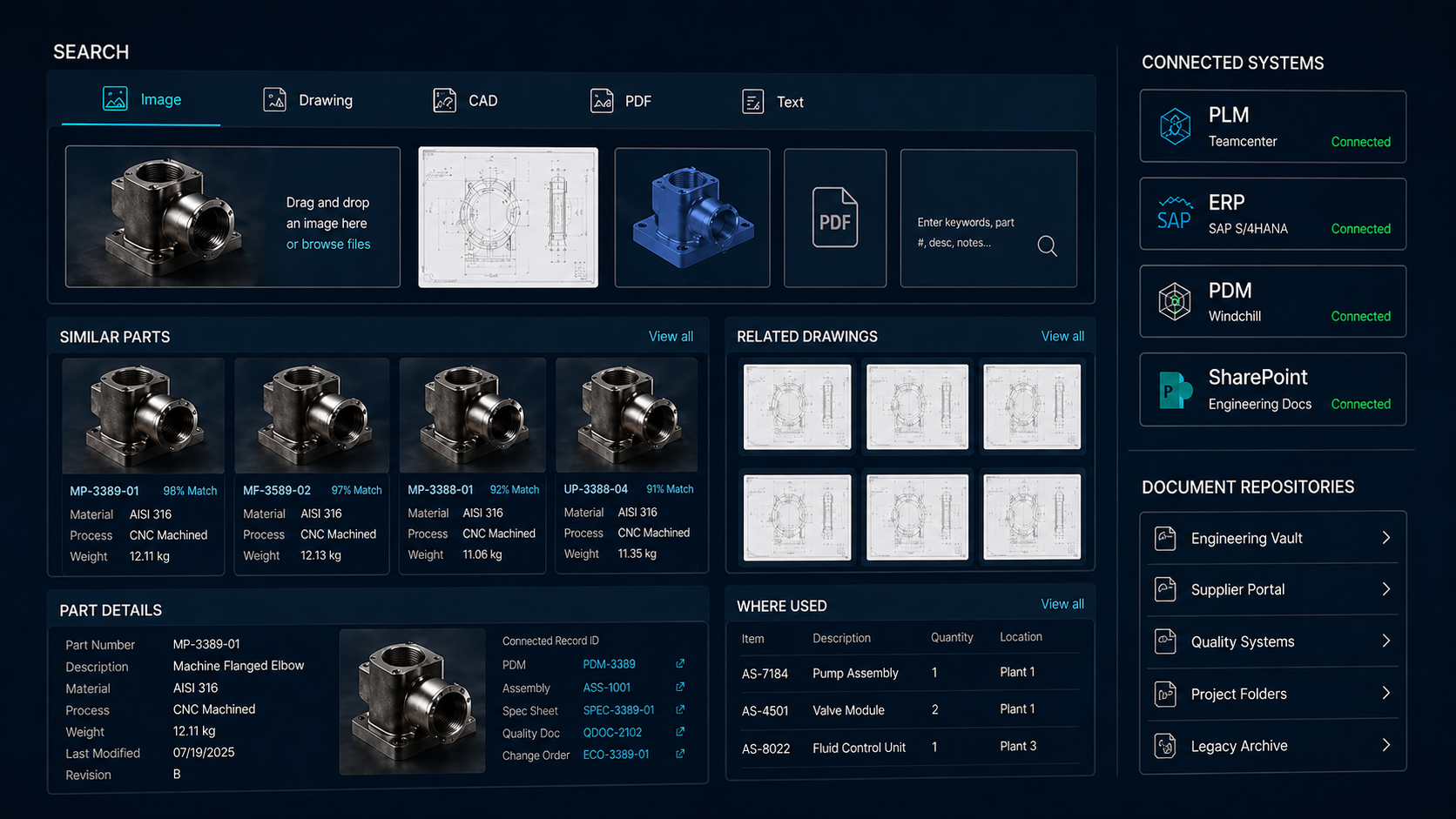
Not every visual search platform is built for manufacturing.
Consumer-style image matching can be interesting, but industrial teams need much more than visually similar pictures. They need search that works with engineering content, business records, and the systems they already use.
If you are evaluating visual search for manufacturing, here are the capabilities that matter most.
Multiple Search Inputs
Manufacturing teams do not all start from the same kind of information.
A good platform should support search by:
- image
- drawing
- sketch
- shape
- CAD file
- text
That flexibility matters because the starting point changes from workflow to workflow.
Support for Engineering File Types
The platform should work with the technical files manufacturers already rely on, including:
- CAD-related files
- 2D engineering drawings
- PDFs
- scanned prints
- images
- linked document records
Without that support, the search experience stays too shallow to be useful in production.
AI Data Extraction
Visual search becomes far more valuable when it can use extracted technical information as part of the search and filtering experience.
Useful extraction capabilities may include:
- title block data
- material information
- dimensions
- tolerances
- PMI
- GD&T
- document classifications
This helps teams search by both what something looks like and what is known about it.
Integration With Existing Systems
Manufacturers should not have to replace core systems just to benefit from better search.
A practical platform should connect to existing environments such as:
- PLM
- ERP
- PDM
- CAD vaults
- SharePoint
- network folders
- document repositories
The point is to make existing data more usable, not to force a major system reset.
Secure Deployment Options
Industrial data is sensitive, and deployment matters.
Teams should look closely at:
- permission handling
- data separation
- user access control
- cloud versus on-prem requirements
- API and integration patterns
Search cannot be truly useful in manufacturing unless it also fits the company’s security and deployment expectations.
Workflow Context
The best results are not just visually similar files. They are files connected to useful context.
A strong visual search platform should help users connect their result to:
- prior jobs
- inspection history
- supplier documents
- quote records
- work instructions
- quality records
That is what makes search operationally useful instead of just visually interesting.
The Practical Test
The simplest test is this: can the platform help a real user find the part, drawing, or record they need faster using the clues they actually have?
If the answer is yes, the system is moving in the right direction.
If you want the broader picture first, the best place to start is the main overview: Visual Search for Manufacturing.
And if you want the outcome side of the story, see the business value of visual search in manufacturing.