· VizSeek · Blog · 3 min read
Why Keyword Search Falls Short in Manufacturing
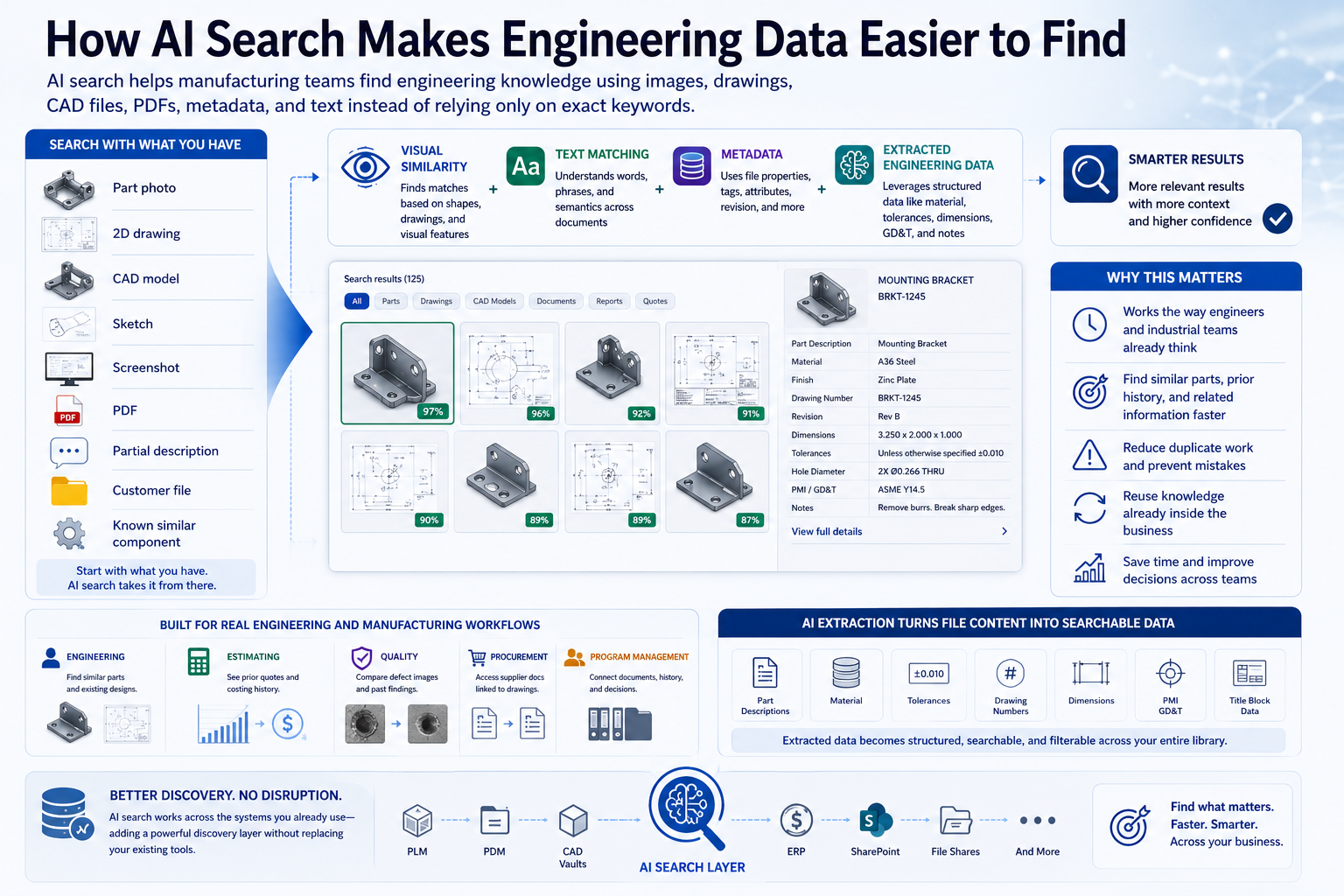
Manufacturing teams often have the part, drawing, or image they need to start with, but not the exact words, file name, or part number needed for traditional search.
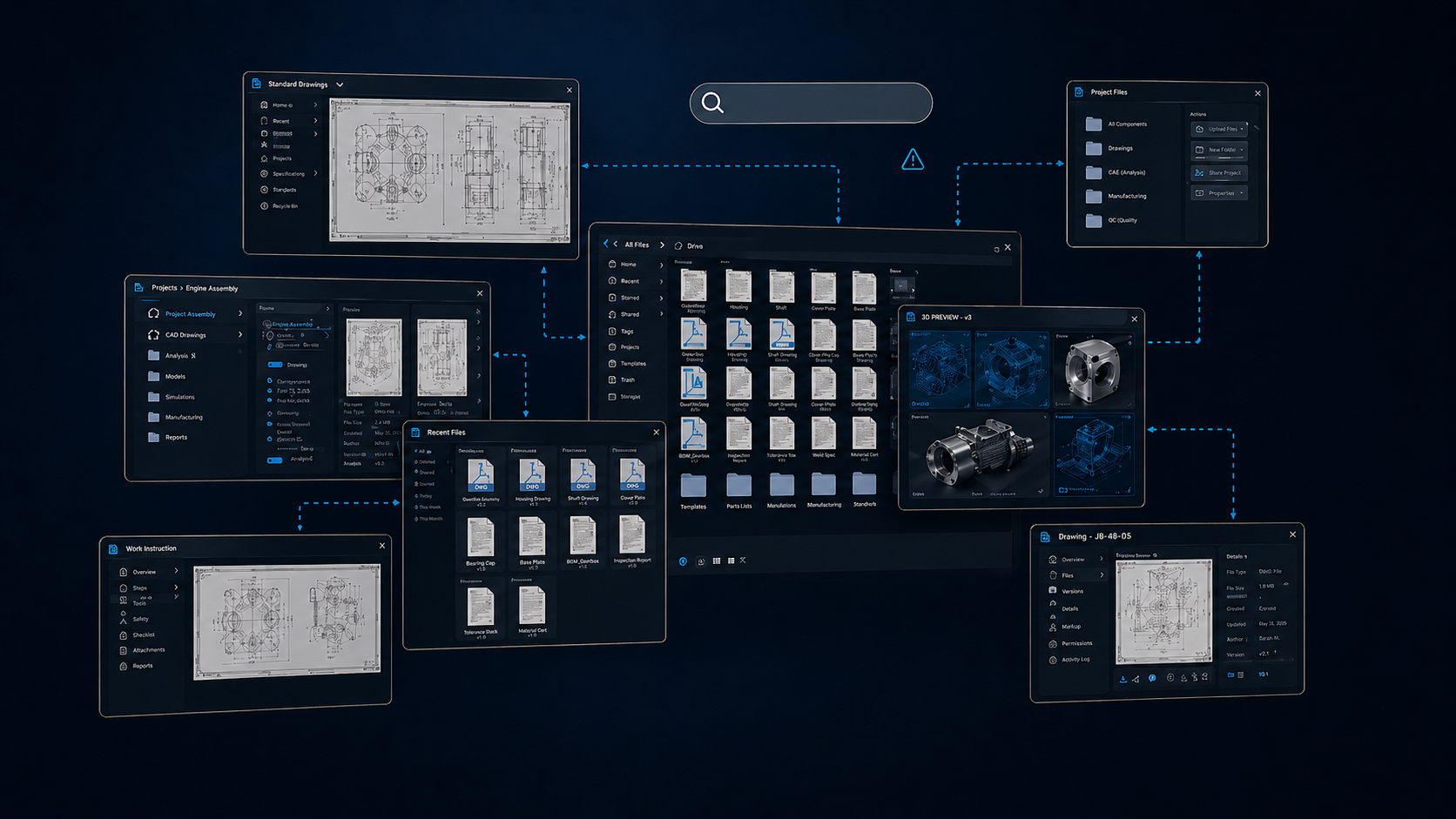
Manufacturing teams often know that the information they need exists somewhere in the business. The problem is that they cannot always find it quickly using a keyword box.
Traditional search works best when someone knows exactly what to type. In manufacturing, that is often not the case.
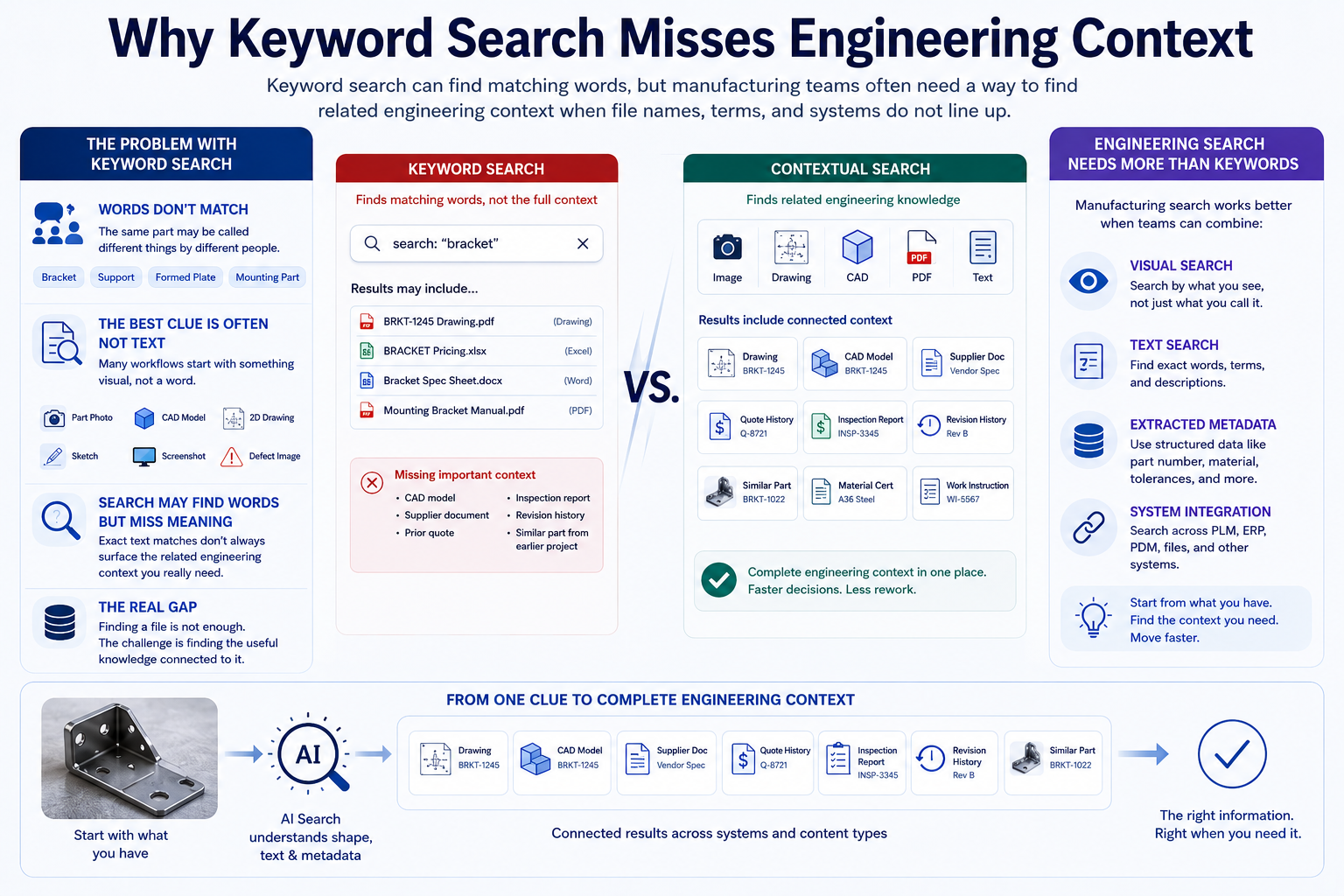
An engineer may have a drawing but not the part number. A buyer may know what a component looks like but not how a supplier labeled it. A technician may have a worn part in hand but no clear file path, document name, or system reference. A quality engineer may have a defect photo but no idea what earlier record might describe the same problem.
That is where keyword-only search starts to break down.
Manufacturing Data Is Hard to Describe Consistently
Industrial data is rarely labeled in one uniform way across the entire organization.
The same part might be called:
- a bracket in engineering
- a mount in purchasing
- a plate in a supplier document
- a housing in an RFQ package
- a fixture in a customer conversation
All of those descriptions may point to the same component family, but a simple keyword search may not connect them.
File names also create problems. Some are detailed. Some are vague. Some follow a standard that no one uses anymore. Older files may be stored in scanned PDFs or image-based documents with almost no searchable metadata.
The Data May Be There, But It Is Still Hard to Reach
Even companies with strong systems can struggle with discovery when data is spread across:
- PLM systems
- ERP systems
- PDM systems
- CAD vaults
- SharePoint
- network folders
- document repositories
- supplier portals
- legacy databases
The challenge is not only storage. It is whether users can find the right information based on the clues they actually have at the moment.
Often, they do not know:
- the exact part number
- the original project name
- the customer label
- the supplier terminology
- the correct file name
- where the record was stored
But they may have something else that is more useful: a drawing, image, sketch, or physical part.
Why This Matters Operationally
When search depends on perfect terms, teams spend more time digging and less time deciding.
That affects:
- engineering reuse
- quoting speed
- quality investigations
- supplier lookups
- maintenance workflows
- design standardization
The cost is not just a slow search result. The cost is duplicated work, inconsistent decisions, and missed opportunities to reuse what the company already knows.
A Better Starting Point
For many manufacturing workflows, the most useful clue is visual, not verbal.
That is why visual search for manufacturing matters. It gives teams a way to start from what they can see instead of what they can perfectly describe.
When users can search from a part photo, drawing, sketch, CAD model, or screenshot, they are more likely to find related designs, records, documents, and history without guessing the exact language first.
That shift makes search more practical for the way industrial teams actually work.
For a related next read, see visual search use cases in engineering, quoting, and quality.