· VizSeek · Blog · 3 min read
The Business Value of Visual Search in Manufacturing
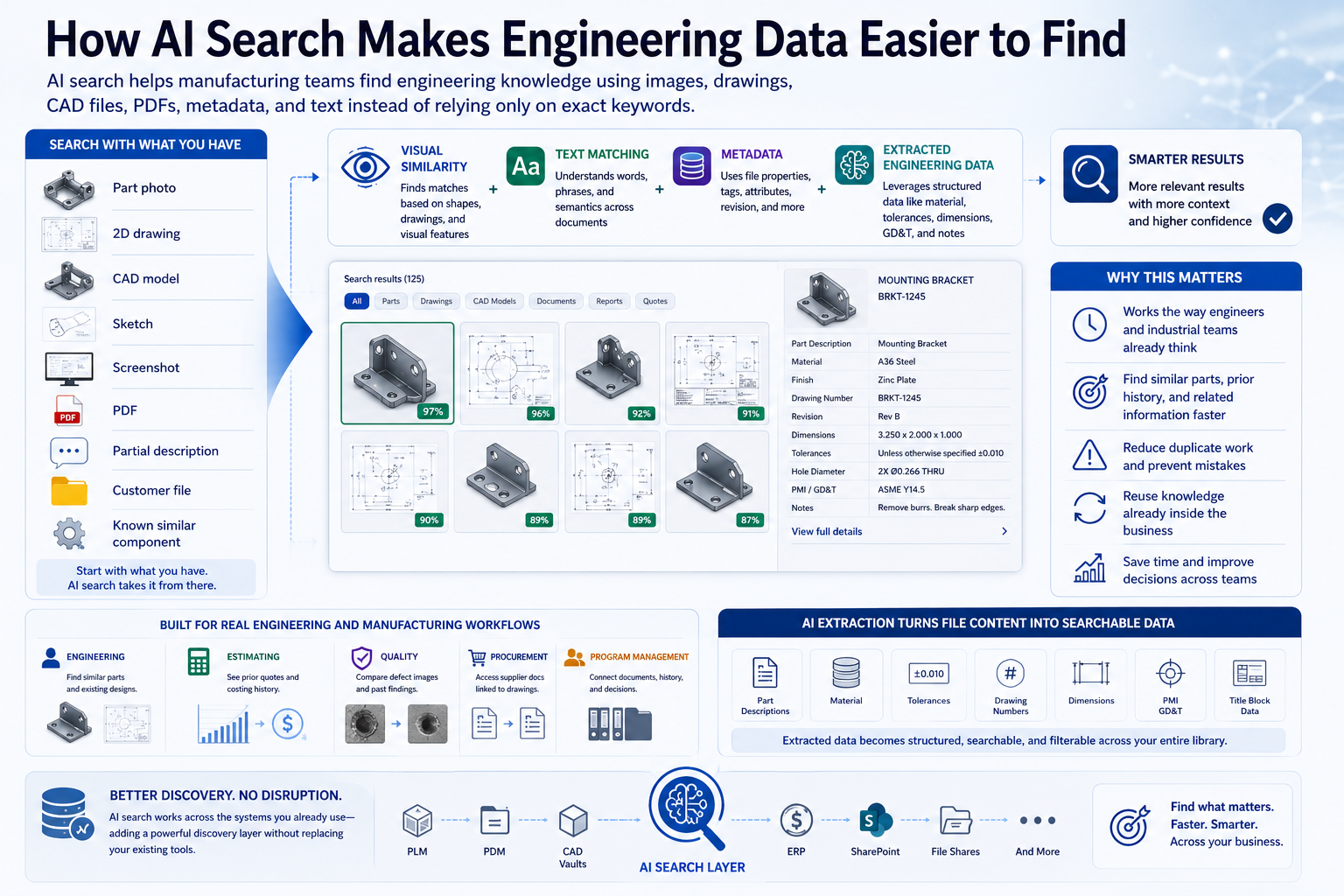
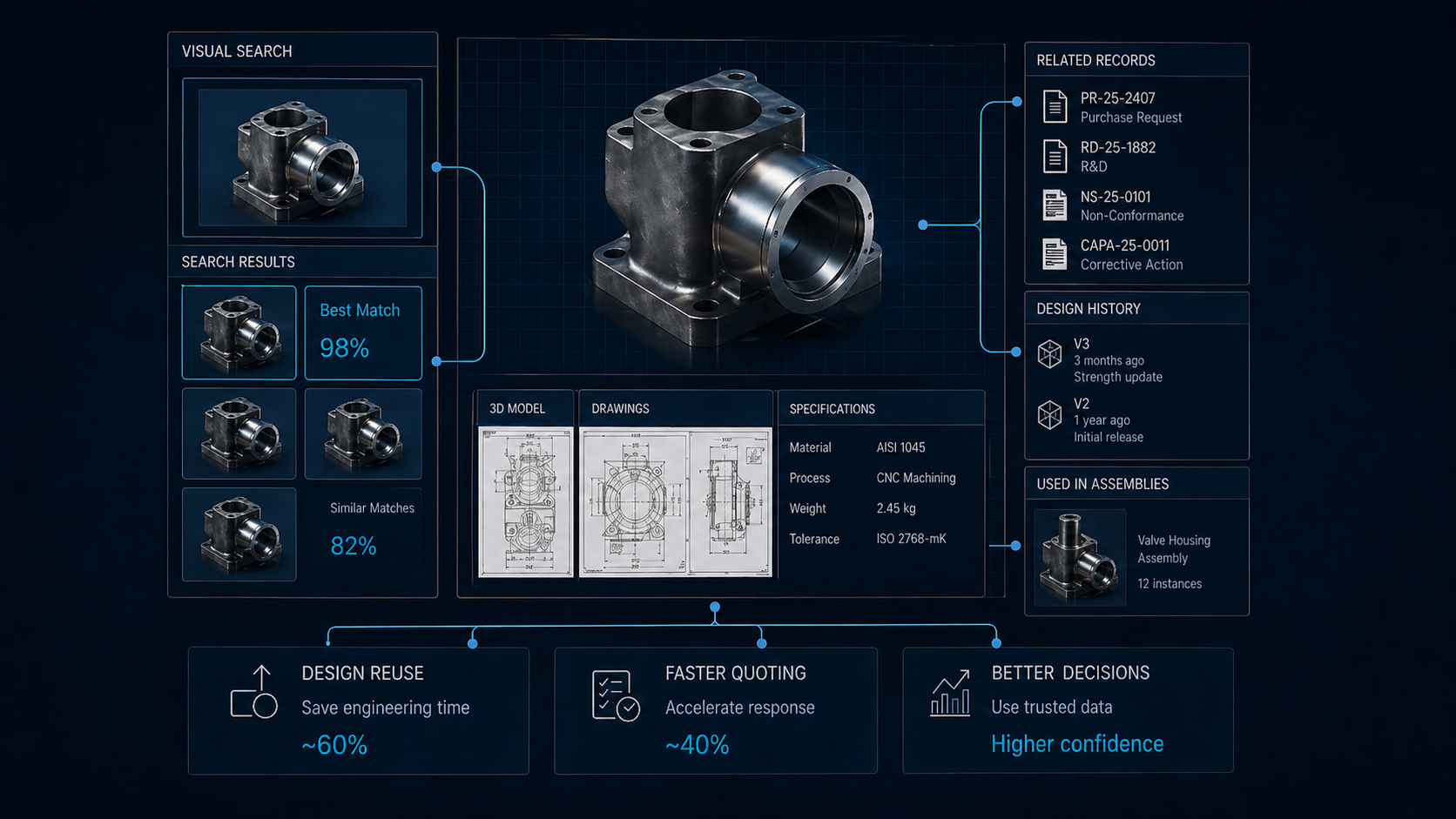
Visual search helps manufacturers reduce search time, improve reuse, speed quoting, strengthen quality investigations, and get more value from existing engineering data.
Manufacturers usually do not suffer from a lack of data. They suffer from slow access to useful data.
Parts, drawings, CAD files, inspection reports, supplier documents, and prior job records already exist somewhere in the business. But when teams cannot find them quickly, the organization loses time and repeats work it has already done.
That is where visual search creates real business value.
Less Time Spent Searching
One of the biggest gains is simply reducing the time it takes to locate the right file, record, or prior example.
When people can begin with a part image, drawing, sketch, or CAD model, they avoid guessing keywords or manually browsing through disconnected systems.
That faster access supports quicker decisions across engineering, quoting, quality, and operations.
Better Reuse of Existing Work
Manufacturers often have years of useful design and process history. The challenge is unlocking it when a new request arrives.
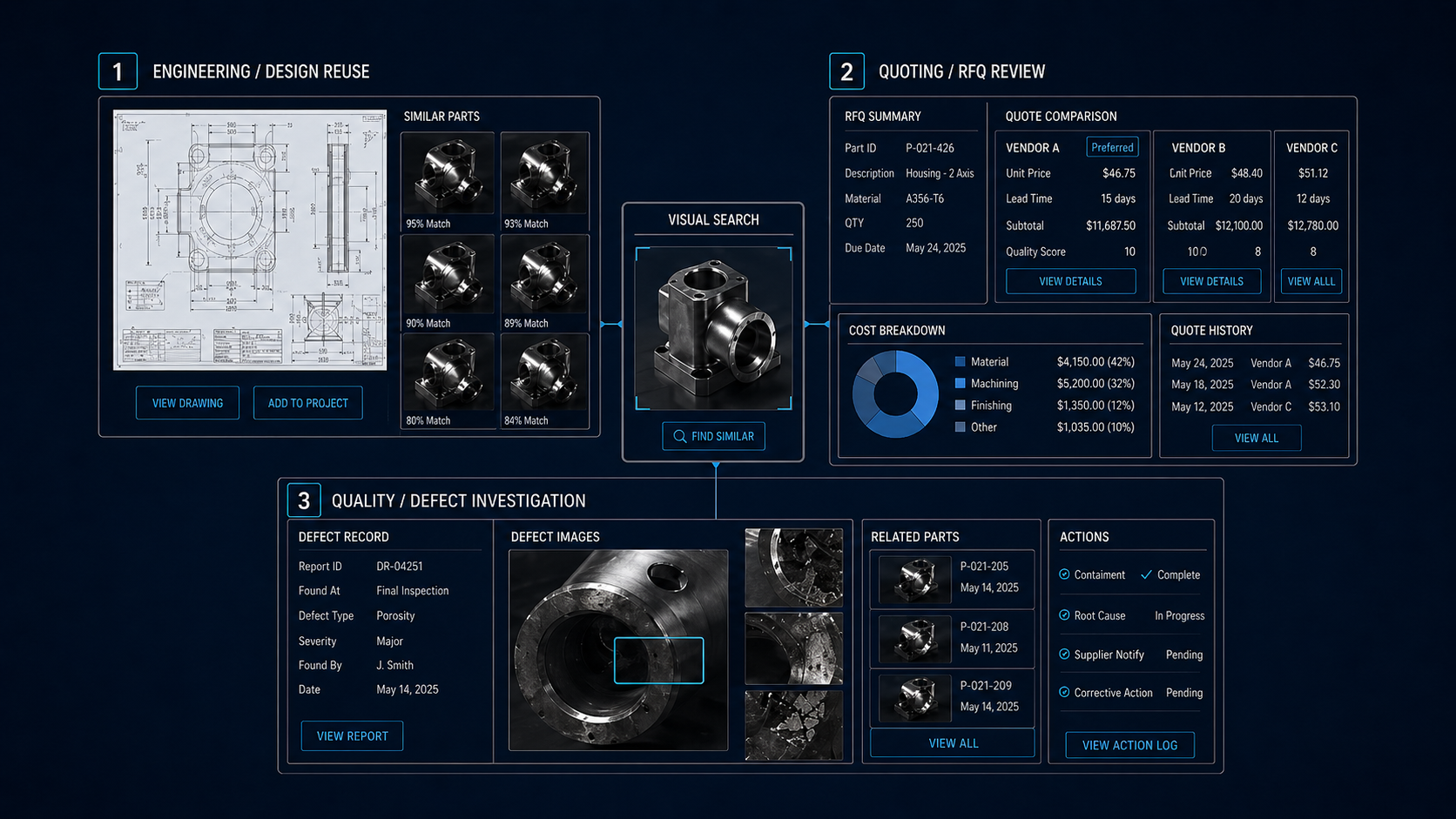
Visual search helps teams reuse:
- prior part designs
- related drawings
- historical quotes
- similar manufactured jobs
- supplier and material information
That reduces duplicate effort and makes existing knowledge more valuable.
Faster Quoting and Estimating
When estimators can connect a customer drawing or part image to prior jobs, quoting becomes faster and more consistent.
Instead of starting with a blank page, the team can begin from known history. That can improve response time and make estimating workflows more scalable.
Stronger Quality Investigation
Quality work often starts with a visible issue.
Visual search helps teams connect that issue to:
- prior defect examples
- inspection records
- related drawings
- connected product history
That improves investigation speed and helps teams make use of what the business already learned from earlier cases.
Better Use of Existing Systems
Manufacturers have already invested heavily in systems such as PLM, ERP, PDM, CAD vaults, SharePoint, and document repositories.
Visual search does not have to replace those systems. Instead, it can help users get more value out of them by creating a better way to find what is already stored there.
That matters because the business value often comes from improved access, not new storage.
A Practical AI Use Case
Many manufacturers are looking for AI projects that fit real workflows rather than abstract experiments.
Visual search stands out because it is easy to connect to everyday industrial questions:
- Have we made this before?
- Is there a similar drawing?
- Can we reuse an existing design?
- Has this issue happened before?
- Do we already have the supporting records?
That makes it a practical way to apply AI where it can create immediate value.
The Bottom Line
Visual search helps manufacturers make better use of the technical information they already have.
Potential benefits include:
- faster part and drawing discovery
- reduced duplicate design work
- improved reuse
- faster quoting
- stronger quality investigations
- better access to historical records
- better connection between engineering files and business context
For many organizations, the opportunity is not collecting more data. It is making existing data easier to find and reuse.
That is why visual search for manufacturing is one of the clearest places to start when applying AI in a practical industrial workflow.
If you want to evaluate platform fit, read what to look for in a manufacturing visual search platform.