
Overview
Starting investigations with what teams can see
A manufacturer and distributor serving the injection molding and die casting industries had already proven the value of AI in one critical area: estimating. After deploying VizSeek-powered quoting tools, the company processed more than 34,000 quotes through its estimating ecosystem and reduced mold base quote cycle time from hours to minutes.
With three production tools already live, the next opportunity was clear: extend that success beyond estimating into other departments across the business.
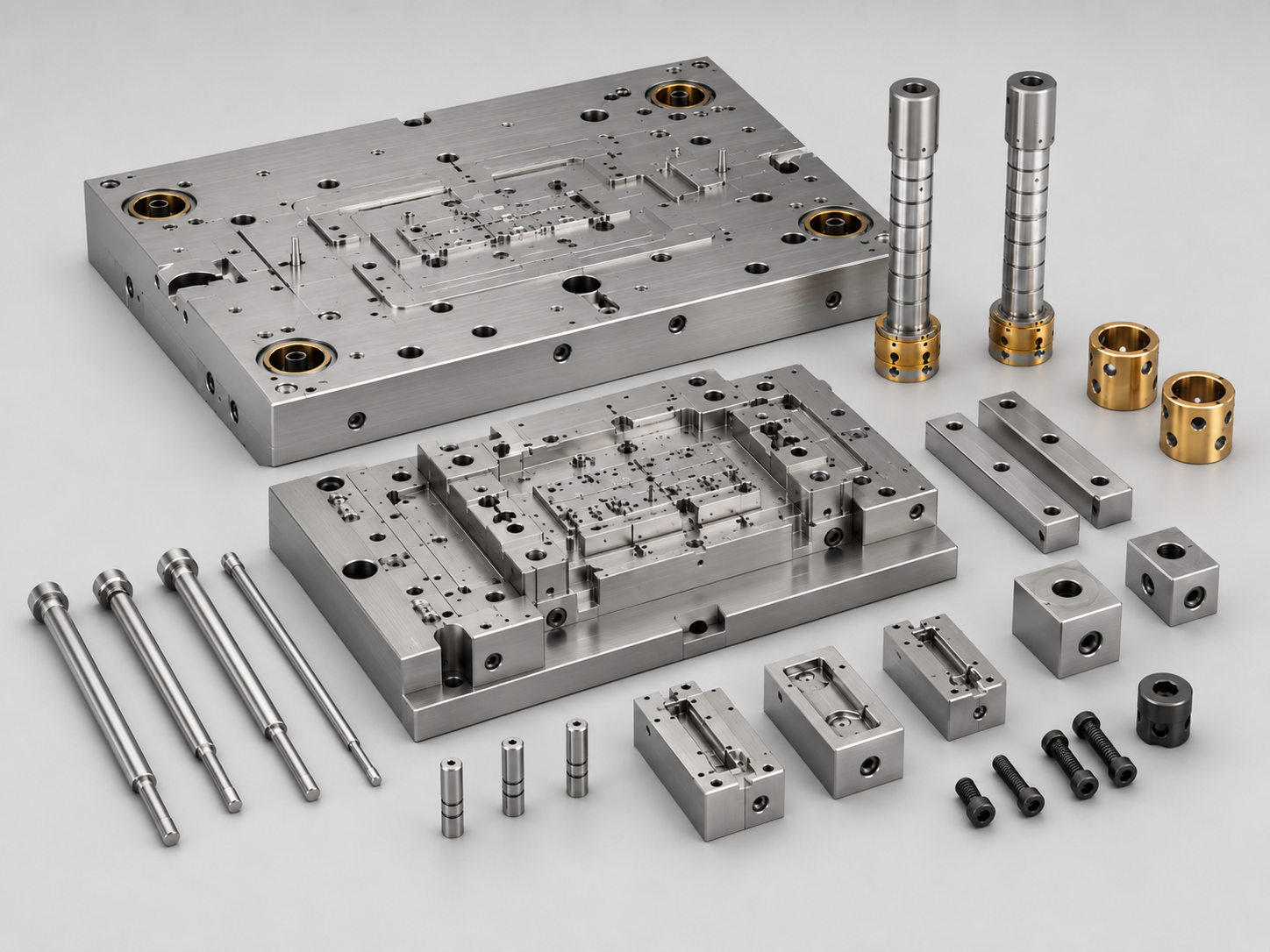
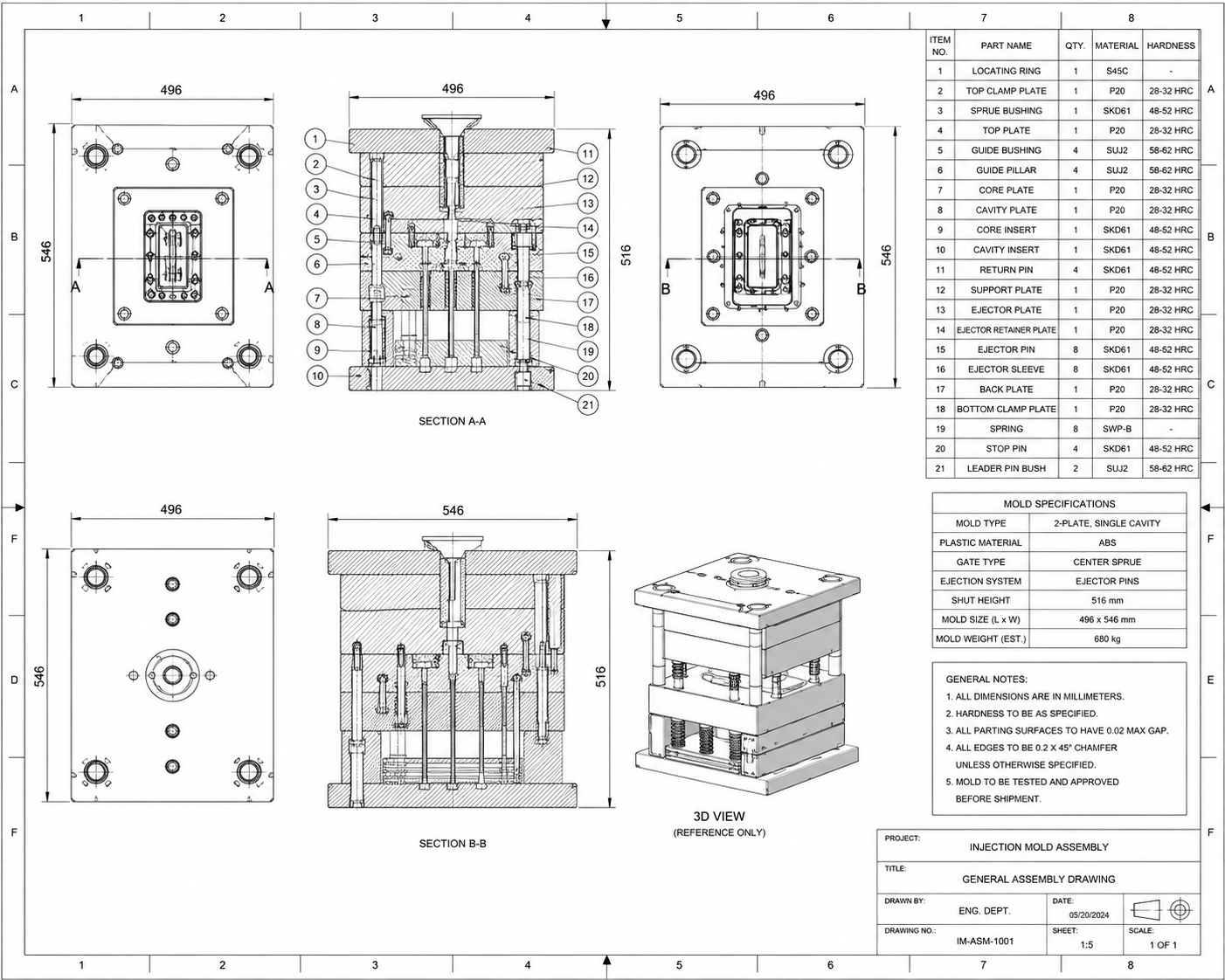
The customer operates in a complex product environment with a large catalog of mold components, including part ejection products, core pins, alignment locks, mold action components, mold cooling products, and custom components for molding applications. Product search, technical matching, and quoting speed all directly affect customer experience and internal efficiency.
The Challenge
The challenge
The company had already demonstrated that AI-assisted quoting could produce real operational value. But across departments, employees were still spending too much time on manual search, data entry, and repetitive technical review. Procurement teams had to sanitize drawings and compare vendor responses. Sales teams needed easier access to quote history, customer drawing archives, and repeat-job information. Accounting staff were rekeying invoice and purchase order data into ERP workflows. Website visitors needed a faster way to find products, cross-reference parts, and request quotes without relying on phone calls or manual assistance.
Needed Capabilities
- Convert more web traffic into product discovery and quote requests
- Retain institutional knowledge across estimating, sales, procurement, and support
- Reduce manual data entry in accounting and ERP workflows
- Make quote history, order history, and archived drawings easier to retrieve
- Improve digital differentiation in a competitive technical product market
The Solution
The solution
Rather than treating AI as a single-use estimating tool, the proposed next step was to expand to a broader platform approach. The roadmap included visual search across technical drawings, PMI extraction from 2D and 3D files, structured extraction from emails, invoices, and purchase orders, print comparison, smart sanitization for NDA-safe sharing, and agentic multimodal retrieval across mixed data types.
That platform approach created a roadmap for applying AI where it could have the most immediate impact: website product discovery, procurement automation, quoting expansion, sales history retrieval, accounting data extraction, and internal knowledge access.
Instead of adding separate point solutions for each team, the proposed strategy was to build on the proven quoting foundation and extend similar AI capabilities across the business.
Visual conditions
Upload-a-drawing product search
Plain-language product finder workflows
Part cross-reference and catalog matching
Vendor response parsing and bid comparison
Invoice and purchase order extraction
NDA-safe drawing sanitization
Workflow
How it worked in practice
The strongest proof point came from quoting. The customer already had three production tools live: a mold base estimating workflow, a custom component workflow, and a self-service standard-product portal. Those tools streamlined work that would otherwise take significantly longer in the ERP environment, reducing manual entry and lowering the risk of mistakes.
01
34,000+ quotes processed through the estimating ecosystem
02
Three production quoting tools already live
03
Mold base quote cycle time reduced from hours to minutes
04
Roadmap for procurement, sales, accounting, website, and knowledge workflows
05
Expanded access to product, quote, drawing, and document history
Results
Results
The business case was anchored in outcomes that had already been achieved. The customer had processed more than 34,000 quotes through its estimating ecosystem, had three production tools live, and had reduced mold base quote cycle time from hours to minutes. Those results established both trust and momentum for a larger rollout.
- OK Reduced manual data entry across procurement, accounting, and sales
- OK Faster customer response times
- OK Lower dependency on tribal knowledge
- OK Better reuse of technical and commercial history
- OK Stronger website conversion and self-service capability
- OK Improved digital differentiation in a competitive market
Why It Mattered
Why it mattered
Many manufacturers adopt AI in one narrow function and stop there. This customer had already moved beyond proof-of-concept. The quoting deployment showed that the technology could work in production, support real users, and deliver measurable value.
The next phase was about using that same foundation to create a connected operating layer across technical product search, quoting, procurement, sales, accounting, and internal knowledge access.
For a company serving mold-making and die casting customers with a wide range of standard and custom components, speed and accuracy are competitive advantages. Helping users find the right part faster, process technical requests more efficiently, and reduce repetitive internal work can improve both customer experience and internal throughput.
Conclusion
Conclusion
VizSeek helped this mold components manufacturer prove the value of AI in estimating first, then define a path to expand that value across the enterprise. With quoting already delivering measurable production outcomes, the next step was to extend visual search, document extraction, smart sanitization, and AI-assisted retrieval into adjacent workflows where technical search and manual processing still created friction. The result is a strong example of how a successful departmental AI deployment can evolve into a broader platform strategy.