
Overview
Starting investigations with what teams can see
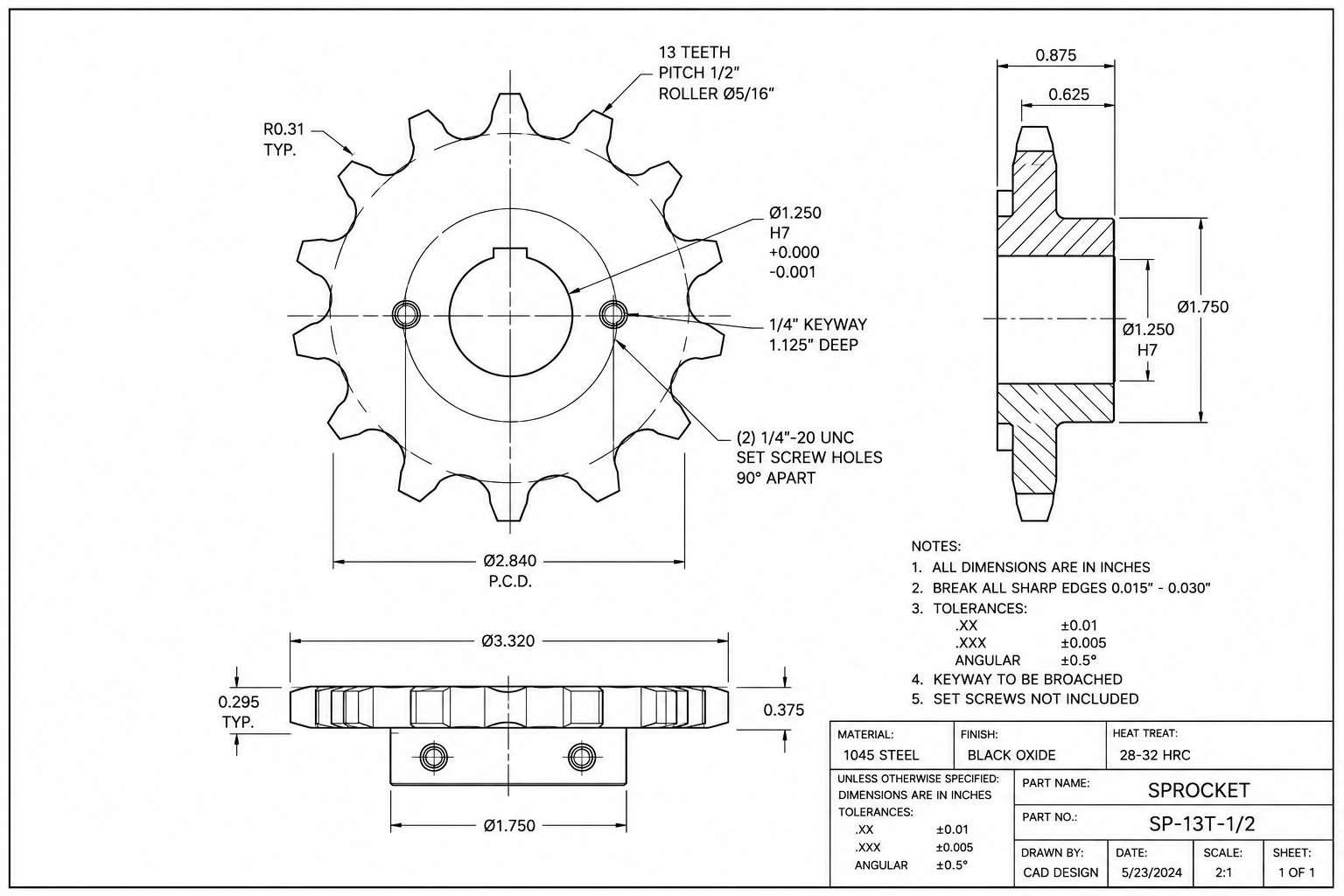
A manufacturing software provider wanted to make 2D drawing information more usable inside its digital workflow. Its platform helps manufacturers generate work plans and quotations more quickly, supports component-based process planning, and can work from both 3D CAD and 2D drawings.
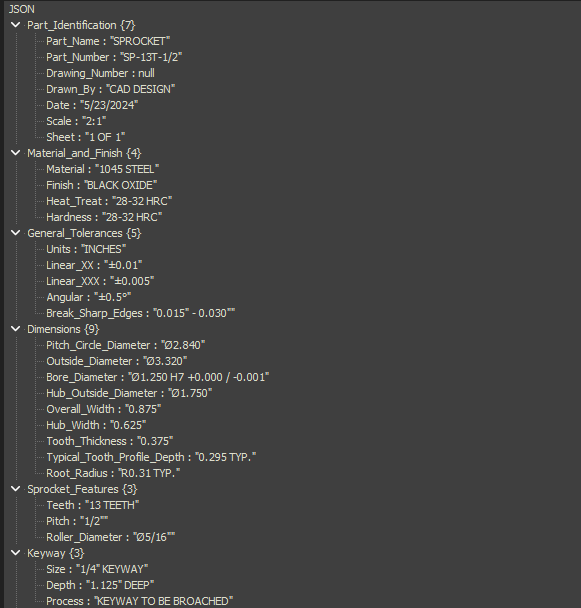
To strengthen that workflow, the company integrated VizSeek into its software platform. The goal was to extract manufacturing information from 2D engineering drawings, including PMI, notes, title block fields, and related annotations, convert that information into structured JSON, and feed it directly into the customer system.
The customer then used that output to automatically associate the extracted information with the corresponding 3D model. VizSeek also returned coordinates for each extracted entity, enabling precise placement and traceability back to the source drawing.
The Challenge
The challenge
For many manufacturers, critical manufacturing requirements still live in 2D drawings, even when a 3D model also exists. Important information such as dimensions, GD&T, notes, title block values, and process instructions may not be readily available as structured data. That creates a disconnect between the drawing and downstream digital workflows.
Needed Capabilities
- Extract PMI and tolerance-related information from 2D drawings
- Capture notes, callouts, title block fields, and annotations as structured data
- Return JSON that downstream software could consume directly
- Preserve coordinate-level traceability to the source drawing
- Automatically associate extracted drawing data with the matching 3D model
The Solution
The solution
VizSeek was integrated as a drawing intelligence layer within the customer software ecosystem. When a 2D drawing was submitted, VizSeek extracted key manufacturing information from the document and returned it in a structured JSON format designed for machine consumption.
The extracted content included PMI and tolerance-related information, notes and callouts, title block fields, and other manufacturing-relevant drawing entities.
In addition to the extracted values, VizSeek returned coordinate information for each detected entity. That allowed the customer system not only to consume the structured data, but also to preserve a spatial link between the extracted result and the original location on the drawing.
Visual conditions
PMI and tolerance-related information
Notes and drawing callouts
Title block fields
Manufacturing-relevant drawing entities
Entity coordinates for traceability
Structured JSON for downstream automation
Workflow
How it worked in practice
A drawing entered the customer software platform as part of the broader manufacturing preparation workflow. VizSeek processed the 2D drawing, identified relevant entities, and produced a JSON payload containing both the extracted content and positional coordinates.
01
2D drawing submitted into the workflow
02
PMI, notes, title block data, and annotations extracted
03
Structured JSON generated for machine consumption
04
Coordinates returned for each extracted entity
05
Extracted information mapped to the corresponding 3D model
Results
Results
This integration helped the customer move manufacturing information out of static documents and into a usable digital pipeline. Instead of treating 2D drawings as files that had to be manually read, the platform could interpret and reuse their contents automatically.
- OK Automated extraction of manufacturing data from 2D drawings
- OK Structured JSON output for direct system consumption
- OK Coordinate-based traceability for extracted entities
- OK Reduced manual interpretation and re-entry
- OK Stronger linkage between 2D drawing requirements and 3D model context
- OK A more scalable foundation for downstream automation
Why It Mattered
Why it mattered
Many digital manufacturing workflows still depend on people manually transferring information from drawings into downstream systems. That limits speed and introduces inconsistency, especially when critical tolerances, notes, and title block fields are embedded in unstructured documents.
By integrating VizSeek, this customer was able to turn 2D drawings into a structured source of manufacturing intelligence. The extracted data could be consumed programmatically, tied to source coordinates, and connected directly to the matching 3D model.
For a platform focused on faster work planning and better use of CAD-related data, this kind of automation fits naturally with rapid work-plan generation, quotation acceleration, and reuse of existing CAD models.
Conclusion
Conclusion
VizSeek helped this manufacturing software provider extend the value of its platform by extracting PMI, notes, title block data, and other manufacturing information from 2D drawings and delivering that data as structured JSON with entity coordinates. The customer then used that output to automatically enrich the corresponding 3D model inside its software workflow. The result was less manual interpretation, better data reuse, and a more connected digital process from drawing to model to work preparation.